Upcoming Event: Babuška Forum
Learning from data through the lens of models via Bayesian inference, with application to real-time tsunami forecasting in Cascadia
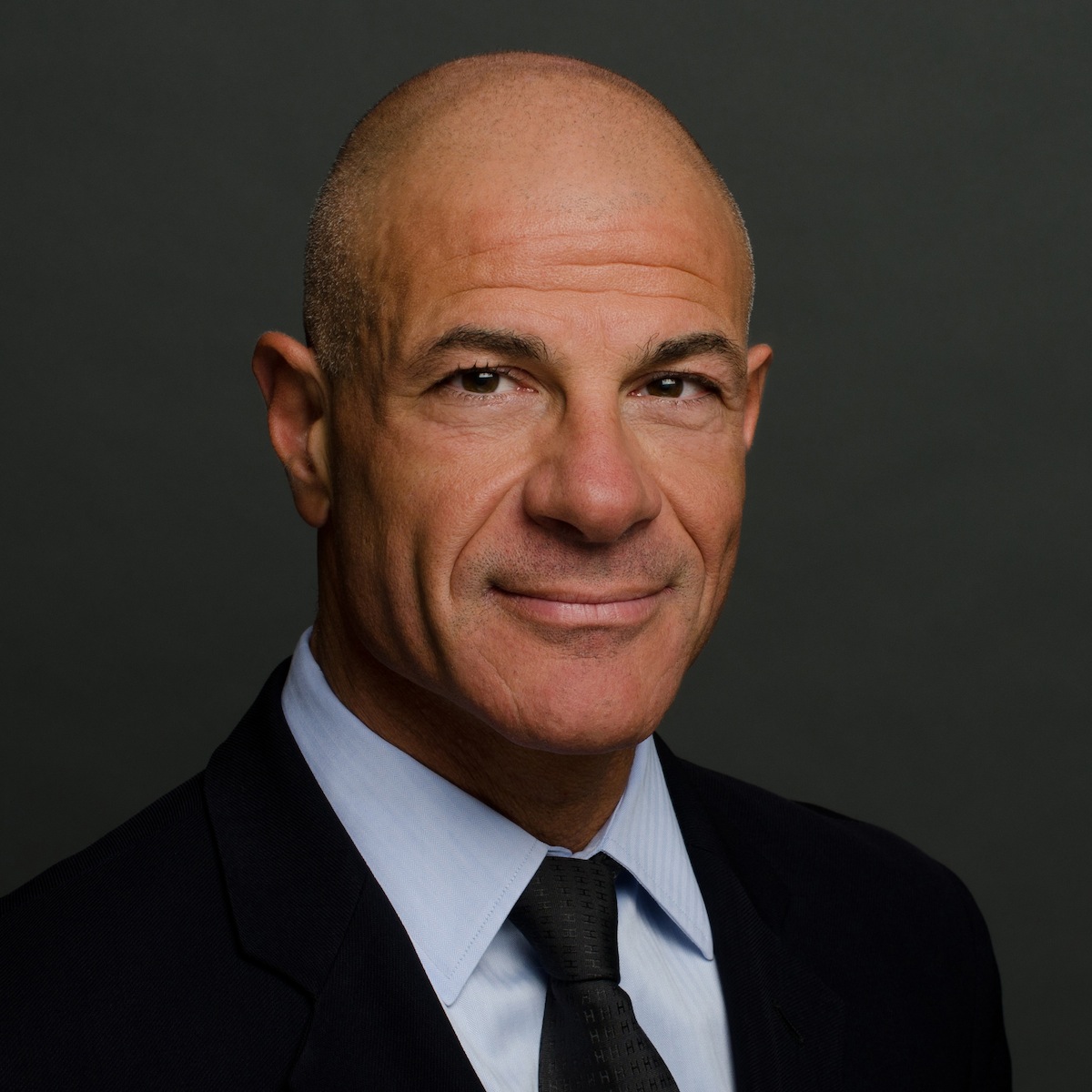
Dr. Omar Ghattas,
10 – 11AM
Friday Feb 13, 2026
Abstract
I will give a high level overview of the challenges encountered in solution of Bayesian inverse problems governed by complex PDE models. After this brief introduction, I will discuss our work on Bayesian inverse problems for inference of tsunami sources for early warning.
Efforts are underway to instrument subduction zones with seafloor acoustic pressure sensors to provide tsunami early warning. Our goal is to create a physics-based early-warning system that employs this pressure data, along with the 3D coupled acoustic–gravity wave equations forward model, to infer the earthquake-induced spatiotemporal seafloor motion in real time. The Bayesian solution of this inverse problem then provides the seafloor forcing to forward propagate the tsunamis toward populated areas along coastlines and issue forecasts with quantified uncertainties. We apply this framework to the Cascadia subduction zone, which has been assigned a 37% probability of a magnitude 8.2+ earthquake in the next 50 years.
Solution of a single forward problem alone entails severe computational costs stemming from the need to resolve ocean acoustic waves in a subduction zone of length ~1000 km and width ~200 km. A single forward problem requires 1 hour on a supercomputer. The Bayesian inverse problem, with a billion uncertain parameters, formally requires hundreds of thousands of such forward and adjoint wave propagations; thus real time inference appears to be intractable. We propose a novel approach to enable accurate solution of the inverse and prediction problems in real time on a GPU
cluster. The key is to exploit the structure of the parameter-to-observable map, namely that it is a time shift-invariant operator and upon discretization can be recast as a block Toeplitz matrix, permitting FFT diagonalization and fast GPU implementation. We discuss the Bayesian formulation and real time GPU solution, and demonstrate that tsunami inverse problems with O(10^9) parameters can be solved exactly in a fraction of a second. This fast Bayesian inversion capability is then exploited to solve the optimal experimental design problem of placement of seafloor pressure sensors to maximize expected information gain. The methodological framework directly extends to any source inversion problem governed by linear time-invariant dynamics.
This work is joint with Stefan Henneking (UT Austin), Sreeram Venkat
(UT Austin), and Alice Gabriel (UCSD).
Biography
Dr. Omar Ghattas is Professor of Mechanical Engineering at The
University of Texas at Austin and holds the Cockrell Chair in
Engineering. He is also Principal Faculty in the Oden Institute for
Computational Engineering & Sciences and Director of the OPTIMUS
(OPTimization, Inverse problems, Machine learning, and Uncertainty for
complex Systems) Center. Before moving to UT Austin in 2005, he spent
16 years on the faculty of Carnegie Mellon University. He holds BSE
(civil and environmental engineering) and MS and PhD (computational
mechanics) degrees from Duke University. He is a three-time recipient
of the ACM Gordon Bell Prize -- 2003, 2015, 2025 -- and
was a finalist for the 2008, 2010, and 2012 Bell Prizes. He received
the 2019 SIAM Computational Science & Engineering Best Paper Prize,
the 2019 SIAM Geosciences Career Prize, and the 2025 SIAM Ivo and
Renata Babŭska Prize. He is a Fellow of the Society for Industrial and
Applied Mathematics (SIAM) and of the U.S. Association for
Computational Mechanics (USACM). He serves on the National Academies
Committee on Applied and Theoretical Statistics, is director of the
M2dt Center (a DOE ASCR-funded multi-institutional collaboration
developing the mathematical foundations for digital twins), and serves
as Co-PI and Chief Scientist for TACC's Frontera and Horizon HPC
system.
Ghattas's research focuses on advanced mathematical, computational,
and statistical theory and algorithms for large-scale inverse and
optimal design/control problems governed by models of complex
engineered and natural systems. He and his collaborators are
developing algorithms to overcome the challenges of Bayesian inverse
problems and data assimilation, Bayesian optimal experimental design,
and optimal control & design under uncertainty, for large-scale
complex systems. These include structure-exploiting methods for
dimension reduction, surrogates, and neural operator approximation,
along with high performance computing algorithms. These components are
integrated and coupled together to form frameworks for digital
twins. Driving applications include those in geophysics and earth
systems (earthquakes, ice sheet dynamics, ice-ocean interaction,
poroelasticity, seismology, subsurface flows, tsunamis), advanced
materials and manufacturing processes (metamaterials, nanomaterials,
additive manufacturing, nondestructive evaluation), and complex
fluids.